Ethan Glines / Founder · Operator

Laie, Hawaii

Strategy. Brand. Deliver.

I’ve done it twice. In two different industries.

I build brands and systems that make complex ideas obvious — turning two-minute explanations into five-second ones.

See the work
Portrait of Ethan Glines
Based in · United States Founder · Blue Luna Studying · BYU Hawaii Status · Open to roles

Elevator Pitch

Sixty seconds.

0:00 0:00

Or read it

Utah summers hit 115 degrees, so Hawaii was an easy sell for my wife. We’ve been here ever since — surfing, raising a family, and running the business remotely. The flexibility is the whole point.

For the last five years, I’ve helped businesses clarify their messaging through video — blending strategy with storytelling so a prospect lands on the page, gets engaged, and actually understands how their problem gets solved. The videos do the work: revenue up year over year, customer loyalty up with it. Innovation and consistency are the values I build on, and those are the outcomes that prove it.

— Ethan

About

Two businesses. Two industries. One operator.

I’m Ethan Glines, founder of Blue Luna — a branding consultancy that takes founder-led businesses from invisible to obvious. I lead the strategy, write the copy, design the site, and deliver the build. One operator, end-to-end. Most recent client: SyTech, a records management firm whose two-minute pitch I compressed into a five-second headline they now lead with.

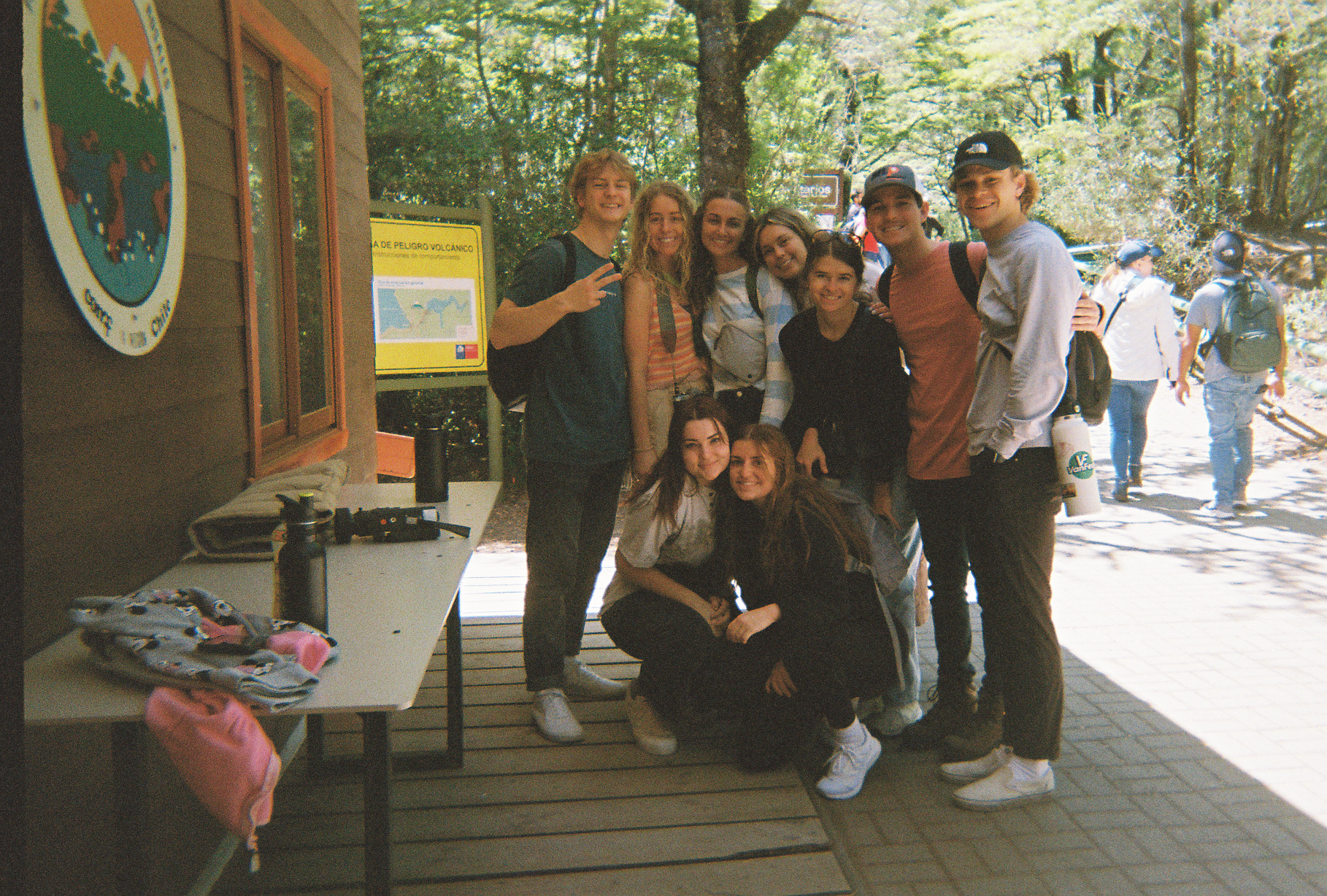
Before Blue Luna was a consultancy, it was Blue Luna Media — cinematic editing for seven-figure brands. Between then and now, I founded a second business in a completely different industry: Travel With Glines, an international travel agency I branded, sold, and delivered a 12-day Patagonia 🏔️ trip out of. I’m currently finishing a finance degree at BYU Hawaii. Same playbook every time: strategize, brand, deliver.

Currently delivering · Blue Luna client work

Where I’ve been
  • 🇺🇸 USA
  • 🇯🇵 Japan
  • 🇵🇭 Philippines
  • 🇸🇬 Singapore
  • 🇮🇩 Indonesia
  • 🇫🇯 Fiji
  • 🇫🇷 France
  • 🇲🇽 Mexico
  • 🇵🇪 Peru
  • 🇨🇱 Chile
0 Businesses founded
0 Countries visited
0 Travelers led to Patagonia
0 Years operating

Selected Work

Three case studies. One operator playbook.

The challenge

SyTech had 25 years of work and 800 million records digitized to their name, and a pitch that took two minutes to land. Public agency buyers were nodding politely and not calling back. The work was elite. The brand was burying it.

What I did

  • Compressed the two-minute pitch into a five-second hero headline — Records Management Problems Solved — and locked it as the line they now lead with in every room.
  • Rebuilt the messaging architecture around their internal framework (Organize. Unify. Scale.) so the homepage tells the whole story in under 220 words.
  • Wrote, designed, and shipped a twelve-page site — homepage, eight solution subpages, mega-menu, shared CSS system — with a cinematic horizontal-scroll hero that does the storytelling so the copy can stay quiet.
  • Held the line on data sovereignty as the single sharpest differentiator and removed every word of SaaS-speak from the site.

The outcome

Site is live in production. The five-second headline is the client’s new lead-in for sales calls and proposals. The Organize/Unify/Scale framework — previously buried in a deck — is now the spine of how they explain themselves publicly.


View SyTech live

The challenge

Blue Luna was a video editing shop that kept drifting upstream — I was advising clients on what to say and why before I ever touched a timeline. The brand still said “video agency.” The work had outgrown the name. Repositioning meant rebuilding the consultancy from the strategy out, with myself as the test client.

What I did

  • Wrote the positioning: the only branding consultancy in the $5K–$25K range that combines deep strategy with full creative implementation — identity, web, content, AI workflow — under one operator.
  • Built the messaging system end to end: brand narrative, voice guide, value propositions by segment, and a four-tagline architecture (hero, mantra, boilerplate, close) so the right words show up in the right room.
  • Landed the strategic flywheel — Think. Build. Grow. — as the structural device that organizes the website, the proposal template, the pitch deck, and the service architecture.

The outcome

Five service pillars defined. Full brand and verbal identity system locked. Dark-theme website in build. The consultancy now sells what I was already doing — strategy plus implementation — instead of the service line I’d outgrown.

The challenge

Every young adult I knew was booking the same trip — Europe, Asia, the photo carousel everyone else was already running. Almost no one was looking at Patagonia, which I’d lived near and knew was one of the safest, most cinematic places on the continent. The gap wasn’t a marketing problem. It was a perspective problem — people couldn’t sell a place they’d never stood in.

What I did

  • Founded Travel With Glines as a young-adult travel agency built around destinations most operators were ignoring.
  • Designed a twelve-day Patagonia itinerary end to end — flights, lodging, national park routing, sightseeing, shopping, the unscripted hours that make a trip feel like yours.
  • Verified every traveler’s passport and ID, collected deposits, locked final payments, and handled all bookings for nine travelers personally.
  • Guided the trip on the ground in Southern Chile — translator, fixer, and host for the full twelve days.

The outcome

Nine travelers, one country, zero things broken. The trip delivered. The more interesting result wasn’t the itinerary — it was that the nine strangers who flew out together became friends I still talk to years later. The business wrapped after one run. The relationships didn’t.

Watch the Patagonia trip

Experience

How I got here.

A short record of what I’ve delivered, built, and led.

  1. 2026 — May

    Delivered SyTech’s homepage. Multi-page brand site, live in production.

  2. 2024 — Present

    BYU Hawaii — Bachelor of Business Management, Finance. Dean’s List. Graduating June 2027.

  3. 2023

    Volunteered with Humanitarian XP in Lima, Peru 🦌 — helped lead 35+ teenagers and a school build over the summer.

  4. 2022 — 2023

    Founded Travel With Glines — branded, sold, and delivered a 12-day Patagonia 🏔️ trip for 9 travelers in Southern Chile.

  5. 2021 — Present

    Founded Blue Luna (originally Blue Luna Media). Cinematic editing for seven-figure brands evolved into a full branding consultancy. Recent client: SyTech.

  6. Before that

    Made things. Sold them. Learned by doing.

Field Notes

What I’m noticing.

Short essays on marketing, branding, and operating in the wild. Originally posted to LinkedIn — restored here in their full form.

01 ~2 days ago Brand Loyalty

Why “Coke People” Stay Loyal

Over the last 10 years, I’ve been able to try Coca-Cola in over 10 countries, each with its own distinct flavor that reflected the local culture. 🌍

Most people grab a soda out of habitual buying behavior, including myself, as I’m not much of a variety-seeker. So when I recently sat down for a History Channel documentary on the Cola Wars and ran a blind taste test, I was all in. 🦊

Lo and behold, I picked out my favorite right away. If you’ve never really had a cola, Coke and Pepsi taste nearly the same. But for those of us who are fans, the difference is very real.

The documentary covers the decades-long war between Coca-Cola and Pepsi. It was crazy to learn about the Pepsi Challenge and how Coke launched New Coke as a brand-new product in 1985. It flopped hard, and customers were furious! I know if I were alive then, I would be as well... 🙃

It tied right into what I’d been reading on consumer buyer behavior. New Coke failed because the choice was never about taste; it was about perception and emotion. People didn’t just want a drink; they wanted the version of Coke that fit their lifestyle and identity.

So how do people choose when products are this similar? Honestly, the product stops being the point. 🧠 People buy the brand they feel connected to, which is why someone will proudly call themselves a “Coke person.”

In a crowded market, you’re not selling a product; you’re selling a feeling people want to be part of.

02 ~1 week ago Market Research

The Doctor in the Empty Waiting Room

As a small business owner, it’s been really interesting trying to identify my target audience. Who do I actually want to help solve their brand positioning challenges?

I’ve had clients that are 7-figure businesses and others who are just getting started. Surprisingly, the process of helping them is quite similar. But finding them? That’s where the similarities disappear. 🔍

Recently I dove deep into market research, and it tied directly into what I’ve been wrestling with at work. Positioning matters, but it means nothing if the right people can’t find you. It’s like a doctor with a cure for an illness, but no one knows he’s a doctor. 🩲

At Blue Luna, we’re currently narrowing down our target customer using a mix of primary data we collect ourselves and secondary data from outside sources, including AI search engines that are giving us a whole new layer of customer insights we didn’t have access to a year ago. 📊

Big data and marketing analytics are making this kind of research more accessible and affordable than ever for small businesses like ours. 🤖

Big takeaway: even the best positioning is useless without research to back it up. Without that, you’re just a great doctor in an empty waiting room.

03 ~2 weeks ago Strategy

Saving a Star From Becoming a Dog

As an entrepreneur, I dream of one day owning a portfolio of businesses to run, scale, exit, and repeat. 💼 It’s one of the major reasons I’m studying finance. The principles are timeless and carry over into every industry.

However, I recently came across a perspective that honestly changed how I think about organizing a business portfolio.

We studied Johnson & Johnson, a company most people know for BAND-AID, Tylenol, and Johnson’s baby shampoo. But those iconic consumer brands only make up about 15% of J&J’s $94 billion in annual revenue. The real bulk comes from their pharmaceutical and medical device businesses. That kind of diversification made their business portfolio so complex that J&J recently made a major strategic planning move: splitting into two separate companies. 📊

Their portfolio analysis used the BCG growth-share matrix, which sorts every business unit into stars, cash cows, question marks, or dogs based on market growth and market share. 🐕

Here’s what really opened my eyes: identifying which products to keep or drop isn’t just a finance call. Finance can run the numbers all day, but without marketing’s view of the customer and the market, you might end up keeping a “dog” or killing a future “star.” 💡

Big takeaway: even if I want to build, scale, and exit businesses one day, I’ll never be able to do it well with just a spreadsheet. We need the perspectives of every department, including marketing, to make the most informed decisions. 🚀

04 ~3 weeks ago Marketing Myopia

The Photo Sold the Ramen

The Japanese really know how to make amazing food... But it wasn’t the taste that pulled us through the door. It was something way simpler. 🤳🏻🍣

We just went to Japan in April, and it was an amazing trip, country, and culture. 🇯🇵 We were so impressed by the hospitality and kindness from the Japanese people, and we already look forward to going back!

One thing became really clear about halfway through the trip. Every time we were hungry, looking for a restaurant to eat at, which in Tokyo and Kyoto means thousands of options, we were only going to eat at places where the food looked delicious in their menu photos, Google storefront pictures, or window advertisements. 📸

If the photos didn’t look appealing, we kept walking and searching for somewhere else.

Looking at it through a marketing lens, our need for food was real (we were starving most days from all the walking), but our wants were a lot more specific. We wanted ramen that looked rich, sushi that looked fresh, and gyoza with crispy bottoms. Since we had money in our pockets ready to spend, those wants basically turned into demands.

The places with dismal marketing lost us as customers. I’m sure some of them had amazing food, but we just weren’t drawn to their offering. That’s marketing myopia in action: focusing so much on the food itself that the restaurant forgets how customers actually choose where to eat. No appealing photos meant no exchange ever happened, because we never even walked through the door. 🚪

The places that nailed their visuals got more than our money. They got our customer satisfaction and our recommendations to other travelers we ran into during the trip. 🍜

Honestly, especially in a foreign country where we couldn’t read the menu, the photos made the decision for us. Marketing matters way more than I realized, even before anyone takes a bite.

05 ~1 month ago AI Workflow

Two Humans, Twenty-Eight AI Roles

I cancelled my Notion subscription this week. And what I replaced it with kind of blew my mind.

It started with a YouTube video by Dr. Thomas Roedl. He walked through how you can use Claude Code to build your own system for storing and organizing all of your notes, files, and business information right on your computer instead of paying for tools like Notion.

But the deeper I got into his content, the more I realized this guy isn’t just teaching productivity tips. He’s running his entire business with two humans and 28 AI assistants, each one with a specific job like video editing, YouTube strategy, copywriting, and even a “fox” named Larry who manages the whole team.

Two people. Twenty-eight AI roles. That’s it.

That concept alone rewired how I’m thinking about my own business.

But back to the practical side. I’ve used Notion for a long time and it worked fine. But I’m tired of paying for a dozen different subscriptions when I don’t have to. Using just my Claude Code subscription, I built my own system that stores everything I need, organized the way my brain actually works. I can update it whenever I want, ask Claude to find things in my files, and it just works. And the more I use it, the smarter it gets because it learns from everything I feed it.

What really ties it all together is Tom’s ICOR framework, which stands for Input, Control, Output, Refine. The idea is simple. Tools will always change, but your system underneath shouldn’t have to be rebuilt every time you switch apps.

That hit home for me because I’ve been that person who jumps from tool to tool and starts over every single time.

I’ve shared this setup with a few friends and it’s already changing how they work too. I’ll drop the video link in the comments for anyone who wants to check it out.

Capabilities

What I do.

🧭

01

Brand Strategy

Positioning, messaging, and the foundation everything else stands on.

✍️

02

Marketing & Copy

Storytelling that earns attention. Web copy, ad copy, and brand narratives.

💻

03

Design & Web Build

Visual systems and production code that deliver together, not just mockups.

🤝

04

Sales & Operations

Customer acquisition through execution. Closing the work and getting it out the door.

📊

05

Finance

The business-management foundation underneath every venture. Currently studying finance at BYU Hawaii.

🚀

06

Project Leadership

Owning briefs, timelines, and deadlines from kickoff through completion.

Resume

The short version.

The short version of everything above, formatted for fast scanning. Education, founder experience, language fluency, and the references who’ll back the work up.

Includes BYU Hawaii degree progress, Blue Luna (consultancy) leadership, Travel With Glines founder role, humanitarian service in Lima, languages, and professional references.

Download Resume (PDF)

Contact

Let’s build something.

If you’re hiring, briefing a project, or just want to compare notes — I read everything.